
 0
0
 0
0
How Minecraft Became More Than Just a Game
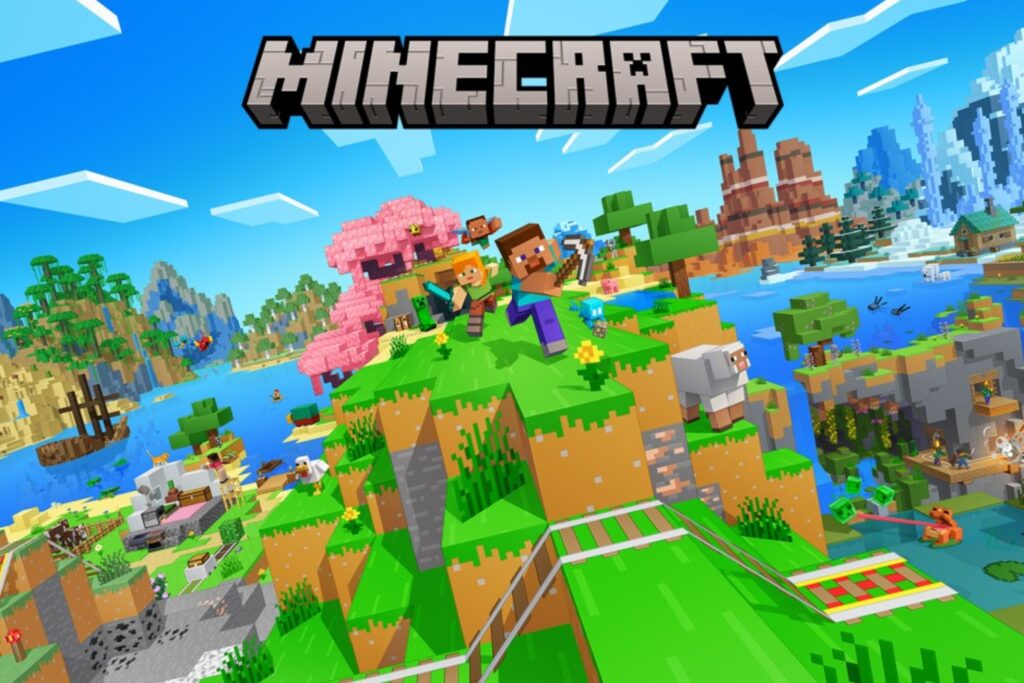
Minecraft began as a simple sandbox game, yet over time it has evolved into one of the most influential digital platforms in gaming history. Unlike many titles that rise and fade with trends, Minecraft has demonstrated a rare ability to remain relevant across age groups, cultures, and technological shifts. Its continued success is not accidental, but the result of thoughtful design, adaptability, and strong community engagement.
At its core, Minecraft offers players freedom. There are no rigid objectives unless players choose them. This openness allows creativity, exploration, and experimentation to guide the experience. Younger players are drawn to its playful building mechanics, while older audiences appreciate the complexity and depth that emerge through advanced systems and collaborative play.
As gaming culture expands beyond entertainment into education, creativity, and social interaction, Minecraft has positioned itself at the center of this evolution. Its enduring appeal lies in how it grows alongside its players, adapting to changing expectations without losing its original spirit.
Creative Freedom as the Foundation of Longevity
Minecraft’s most defining feature is its creative freedom. Players are given tools, not instructions, allowing them to build anything from simple homes to complex virtual cities. This open-ended design encourages imagination and personal expression, making each experience unique.
This creative model contrasts sharply with goal-driven games that limit player agency. Minecraft empowers players to set their own challenges, whether that means survival, architectural design, or large-scale collaborative projects. As a result, players remain engaged long after mastering basic mechanics.
Creative freedom also fuels long-term replay value. With no fixed storyline, the game continuously reinvents itself through player innovation. Mods, custom servers, and user-created content extend the game’s lifespan far beyond traditional release cycles.
This flexibility has made Minecraft a central case study in sandbox gaming culture analysis, demonstrating how player-driven experiences can sustain relevance across generations.
Minecraft as a Social and Collaborative Platform
Beyond individual creativity, Minecraft has become a powerful social space. Multiplayer servers allow players to collaborate, compete, and communicate in ways that extend far beyond gameplay. These digital spaces often function as virtual communities with shared goals, rules, and cultures.
For younger players, Minecraft offers a safe environment to learn cooperation and problem-solving. For older players, it provides a space to reconnect, collaborate, and even teach others. This cross-generational interaction is rare in gaming and contributes significantly to Minecraft’s cultural reach.
Community-driven servers support diverse activities, including role-playing, education, and creative showcases. These environments foster long-term engagement by offering structure without restriction.
By functioning as both a game and a social platform, Minecraft aligns with broader trends in digital interaction, where gaming spaces increasingly double as community hubs.
Education, Learning, and Cultural Impact
Minecraft’s influence extends well beyond entertainment. Educational institutions around the world use Minecraft as a learning tool, leveraging its mechanics to teach subjects such as mathematics, history, coding, and teamwork. Its intuitive interface makes complex concepts accessible through experiential learning.
The game encourages problem-solving, spatial reasoning, and creativity—skills increasingly valued in modern education. Minecraft’s Education Edition formalized this role, providing structured tools for classrooms while preserving the game’s open-ended nature.
Culturally, Minecraft has become a shared reference point across media. From streaming platforms to online forums, its presence shapes discussions about creativity and digital expression. This cultural relevance ensures that Minecraft remains visible even to non-players.
Access to thoughtful gaming culture insights through platforms like Fuzz Journal helps contextualize Minecraft’s role not just as a game, but as a cultural phenomenon shaping how people learn and interact digitally.
Continuous Evolution Through Updates and Community Feedback
Minecraft’s developers have consistently demonstrated a commitment to evolution without disruption. Regular updates introduce new mechanics, biomes, and features while respecting existing systems. This balance prevents stagnation without alienating long-term players.
Community feedback plays a significant role in shaping updates. By listening to player suggestions and observing how features are used, developers ensure changes align with actual player behavior rather than assumptions.
This adaptive development model keeps the game feeling fresh while preserving familiarity. Players return not because the game changes dramatically, but because it evolves thoughtfully.
In an industry where many games rely on aggressive monetization or frequent reboots, Minecraft’s steady, community-focused approach stands out as a model for sustainable success.
Why Minecraft Continues to Attract New Generations
Each new generation of players approaches Minecraft differently, yet finds value in its design. Younger players discover creativity and exploration, while older players often revisit the game for nostalgia or deeper creative projects.
Accessibility also plays a role. Minecraft runs on multiple platforms and devices, reducing barriers to entry. Its visual simplicity allows it to age gracefully, avoiding the obsolescence faced by graphically intensive games.
The game’s adaptability ensures it remains culturally relevant. From educational use to content creation on streaming platforms, Minecraft continuously finds new contexts in which to thrive.
This ability to evolve with its audience reinforces Minecraft’s status as more than a trend—it is a lasting digital space that grows alongside gaming culture itself.
Conclusion
Minecraft’s continued success across generations is rooted in its openness, adaptability, and community-driven design. By prioritizing creative freedom, social interaction, and thoughtful evolution, the game has transcended traditional gaming boundaries. It functions as a creative platform, educational tool, and social space, appealing to players of all ages. Minecraft’s ability to remain relevant without compromising its core identity offers valuable lessons for the broader gaming industry. As digital culture continues to evolve, Minecraft stands as a testament to how simplicity, creativity, and community can sustain long-term engagement. Its influence will likely continue shaping gaming culture for years to come.


